Early warning signs in your plumbing, before a small leak becomes a flood
Plumbing usually gives you notice. The trick is knowing what the notice looks, sounds and smells like.
October 7, 2026 · 4 min read
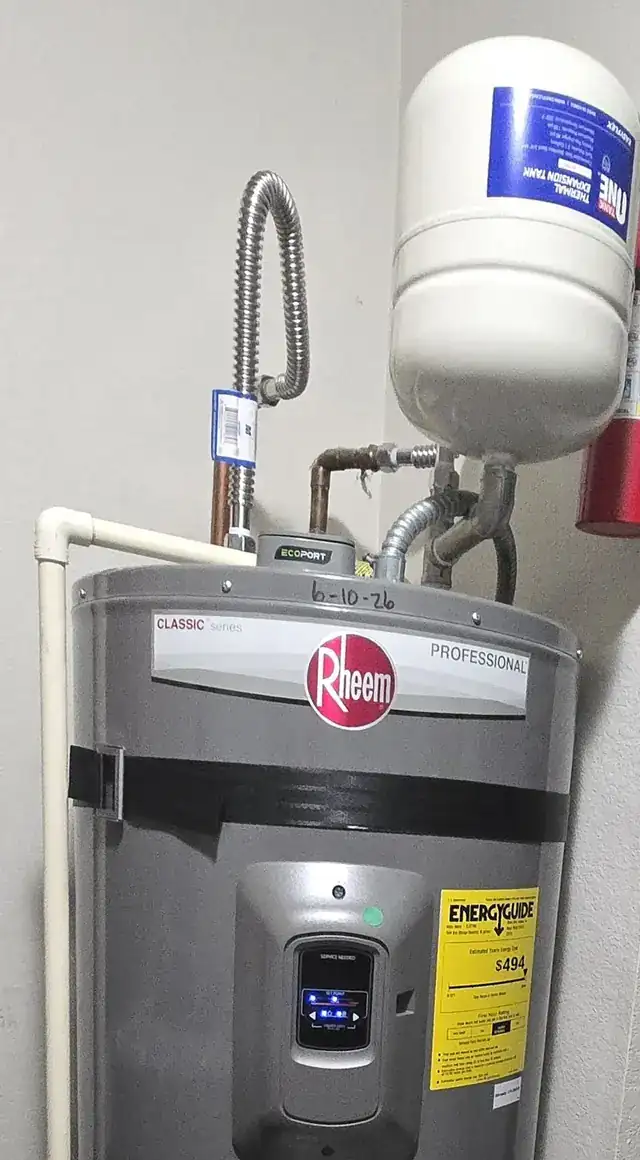
Most plumbing disasters have a long lead-up. A pipe that fails on a Sunday morning has probably been weeping for months. If you know what to look for, you can catch most of these in a five-minute walk around the house once a season.
Your water bill and your meter
A rising bill with no change in how you live is the cheapest early warning you have. Check the meter when no water is running. If the dial or the small triangle is spinning, something is leaking: a toilet flapper, a line outside, or a pipe you can't see. Toilets are the usual suspect. Drop a little food coloring in the tank, wait fifteen minutes without flushing, and if color shows up in the bowl the flapper is leaking.
Sounds in the walls and drains
Gurgling from a drain means air is being pulled through water, and that points to a partial blockage or a venting problem. Banging when a faucet shuts off is water hammer, which is pressure shock traveling the pipes, and over time it can loosen joints and wear out valves. A hiss behind a wall can be a pinhole leak. Rumbling or popping from a water heater tank is mineral scale on the bottom boiling under the burner, a sign that it needs attention before it costs you efficiency or a tank.
Stains, smells and soft spots
- Brown or yellow stains on a ceiling below a bathroom.
- A musty smell in a closet, cabinet or crawl space.
- Paint that bubbles or peels on a wall near a pipe.
- A floor that feels soft or springy near a toilet or tub.
- Mold spots, even small ones, along a baseboard.
Moisture does its damage quietly. By the time you see a stain, the water has been working through insulation and framing for a while. If you find one, trace it upward and note where the stain begins, since that is where the plumber will start.
Color and clarity of the water
Rusty or brown water that clears after a minute can mean old steel pipe or sediment in a water heater. Water that stays discolored, smells like rotten eggs, or tastes metallic is worth testing, and hot-only discoloration points to the water heater. White crust on faucets and showerheads is scale from hard water. It is not dangerous, but it shortens the life of fixtures, heating elements and appliances. Valley homes often benefit from a softener or a conditioning system, and a plumber can discuss what fits your water and your household.
The water heater itself
Look at the tank once a season. Check for moisture at the base, rust-colored streaks on the shell, corroded fittings at the top, and the relief valve discharge pipe for drips. Note the age. Tank water heaters don't last forever, and a unit that's past its midlife is one you want to replace on your schedule, not at 2 a.m. with water across the floor. A thermal expansion tank, usually a small tank mounted on the cold line near the heater, should have its own check too: if it's waterlogged or leaking at the valve, it isn't doing its job.
Outdoor spigots and exposed pipes
Disconnect garden hoses before the first freeze. A hose left attached traps water in the spigot, and a freeze can split the pipe inside the wall where you can't see it. The split often isn't visible until the thaw, when water starts running inside the wall. Frost-free spigots help, but they still leak if a hose is left on them. Pipes in a crawl space, garage or exterior wall should be insulated, and a drip from a faucet on the coldest nights keeps water moving.
Old materials
If your house has galvanized steel supply lines, they corrode from the inside and narrow over the years, which is why pressure drops and discoloration go together. Cast iron drains can crack, scale and eventually leak at joints. Neither is an emergency by itself, but both reward early attention. A Burke's customer wrote that a plumber found an old cast iron line leaking in their crawl space during the January 2024 freeze and caught it before it turned into a major problem. That is the value of looking.
Gas
A rotten-egg smell near a gas appliance is a reason to leave the building and call your gas utility or 911 from outside. No lights, no switches, no phone calls from inside. Gas lines and appliances are professional work.
A simple seasonal routine
- Check under every sink and around every toilet for moisture.
- Look at the water heater base and relief valve pipe.
- Run each drain and listen for gurgles.
- Read your meter with everything off.
- Find and exercise your main shutoff so you know it works.
Burke's Plumbing does maintenance inspections, leak repair, water heater service and replacement, frozen pipe work and gas piping around Selah and Yakima. If any of the signs above sound familiar, call (509) 697-6574, any hour, and say what you've noticed.
Burke's Plumbing, (509) 697-6574
Call (509) 697-6574More articles
Six plumbing problems Yakima Valley homes run into, and what to do first
Most plumbing calls start with something small, and knowing what to check first can save you a mess or a wasted trip.
Chemical drain cleaner vs. a plumber: what to try first
The bottle on the shelf promises a quick fix, but it can leave you with a harder clog and a damaged line.